Symbol Reinforcement Learning
The most important component of learning is communication between agents.
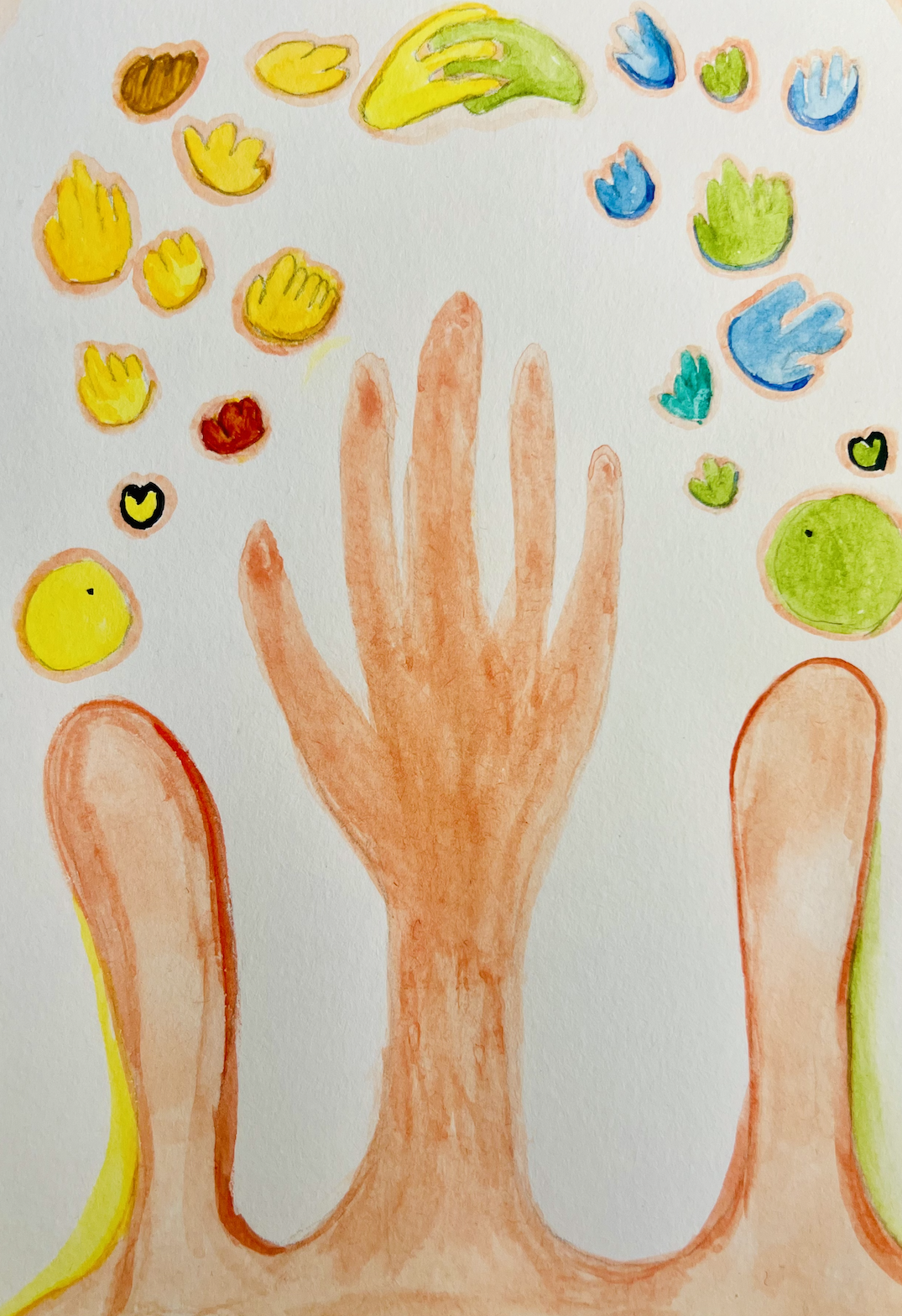
Symbol Reinforcement Learning
As Yeonjea stated, the most important component of learning is communication between agents. Consider a scenario where two agents need to communicate; they must establish a protocol with rules to indicate items in their world. For example, when bees discover a food source, they use a “waggle dance” to communicate its direction and distance to their hive members. Similarly, dolphins use a system of signature whistles to identify themselves and interact with others.
Various animals communicate through protocols developed over long evolutionary histories. For example, whales use complex song patterns and low-frequency sounds to convey messages over long distances, while monkeys employ specific gestures and vocalizations to warn of predators or signal social intentions. Research on vervet monkeys has shown that they use distinct alarm calls for different types of predators—one for leopards, another for eagles, and yet another for snakes—indicating a form of symbolic communication.
According to the principle of survival of the fittest, only those capable of adapting to an effective communication protocol at a given time can survive and pass on their traits. As environments become more complex or competition within a species increases, more advanced communication skills (or protocols) are required. A specific example is Homo sapiens compared to Neanderthals. Studies suggest that Homo sapiens had a more developed capacity for symbolic thought and complex language, which may have given them an advantage over Neanderthals. Evidence from archaeological findings, such as cave paintings, engraved shells, and symbolic artifacts, indicates that Homo sapiens engaged in abstract representation and social cohesion through shared symbols. This ability to communicate more efficiently may have contributed to their survival and the eventual extinction of Neanderthals.
All living beings—including trees, birds, fish, reptiles, and mammals—engage in some form of communication. However, humans use a more symbolized language. Here, “symbolized language” refers to communication based on abstract symbols that consistently represent real-world examples. For instance, the concept of “red” allows two different individuals to identify the exact same thing. Do animals and plants possess this property? Perhaps not. This raises the question: how does this property emerge, and how is it acquired?
We propose that it arises from what we call symbol reinforcement learning, which suggests that two agents share a common symbol and encapsulate the exact same meaning within that symbol.
This symbolic representation is not limited to tangible objects like rocks, toys, or food. It can also apply to abstract concepts such as “red,” “happiness,” “sadness,” and “love.” Symbol reinforcement learning can explain various phenomena, including misunderstandings, biased decision-making, and conceptual entanglements. For example, a person may feel sad when seeing a blue painting because a single object (the painting) is associated with multiple symbols (the color blue and the concept of sadness).
Here are some key directions for further exploration of this idea:
- We need to clarify the mechanisms of symbol reinforcement learning.
- We should identify which real-world objects become linked to specific symbols.
- We must investigate how a shared symbolic understanding (symbolized commonsense) is constructed in society.